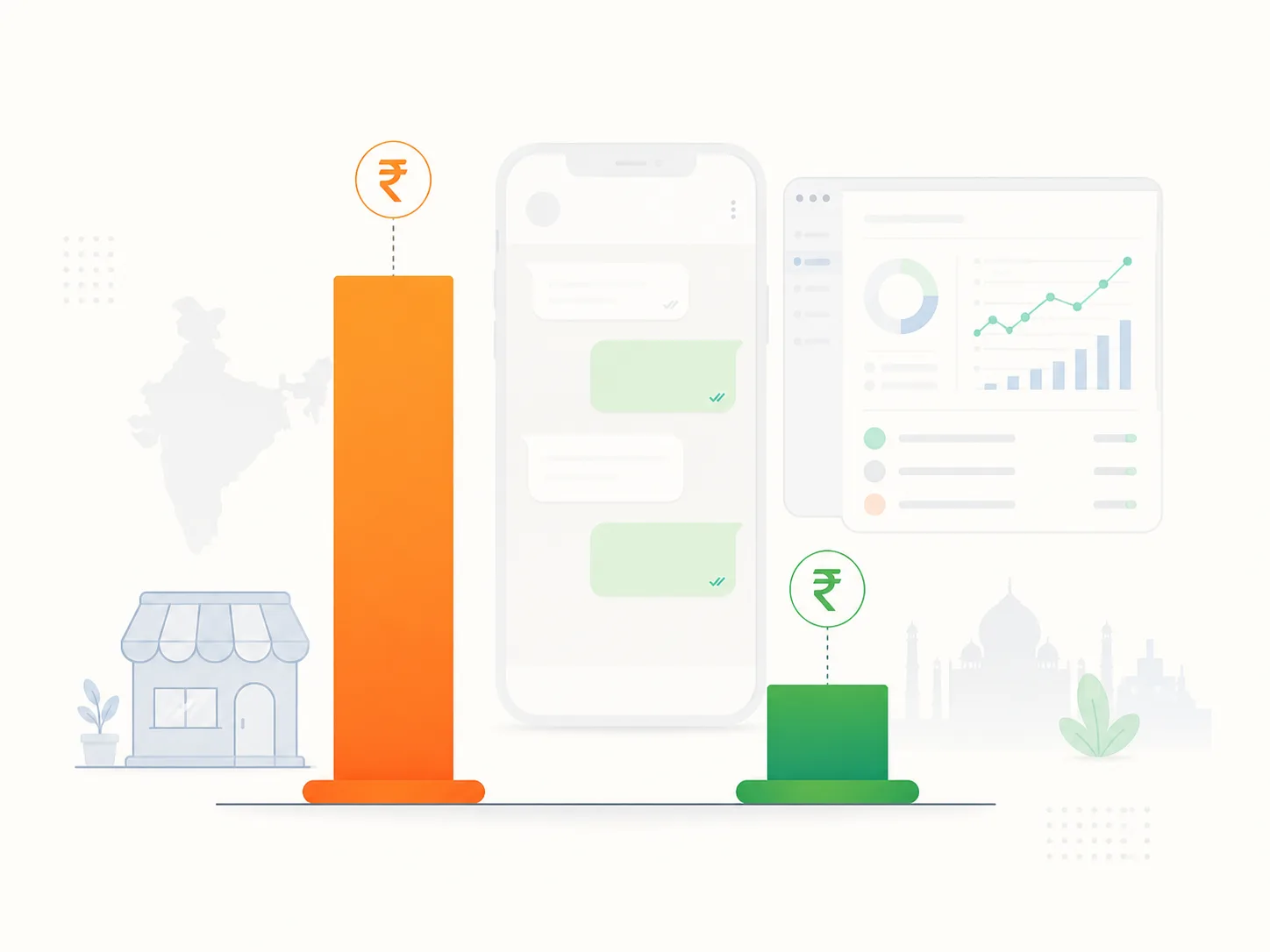
A WhatsApp bulk sender lets you send the same message or reminder to all your contacts in one shot, without switching to a spamming third-party app. Here’s what it actually costs in India, what the DPDP Act and TRAI rules mean for you, and the steps to make sure the software you pick doesn’t get your number banned.
On This Page
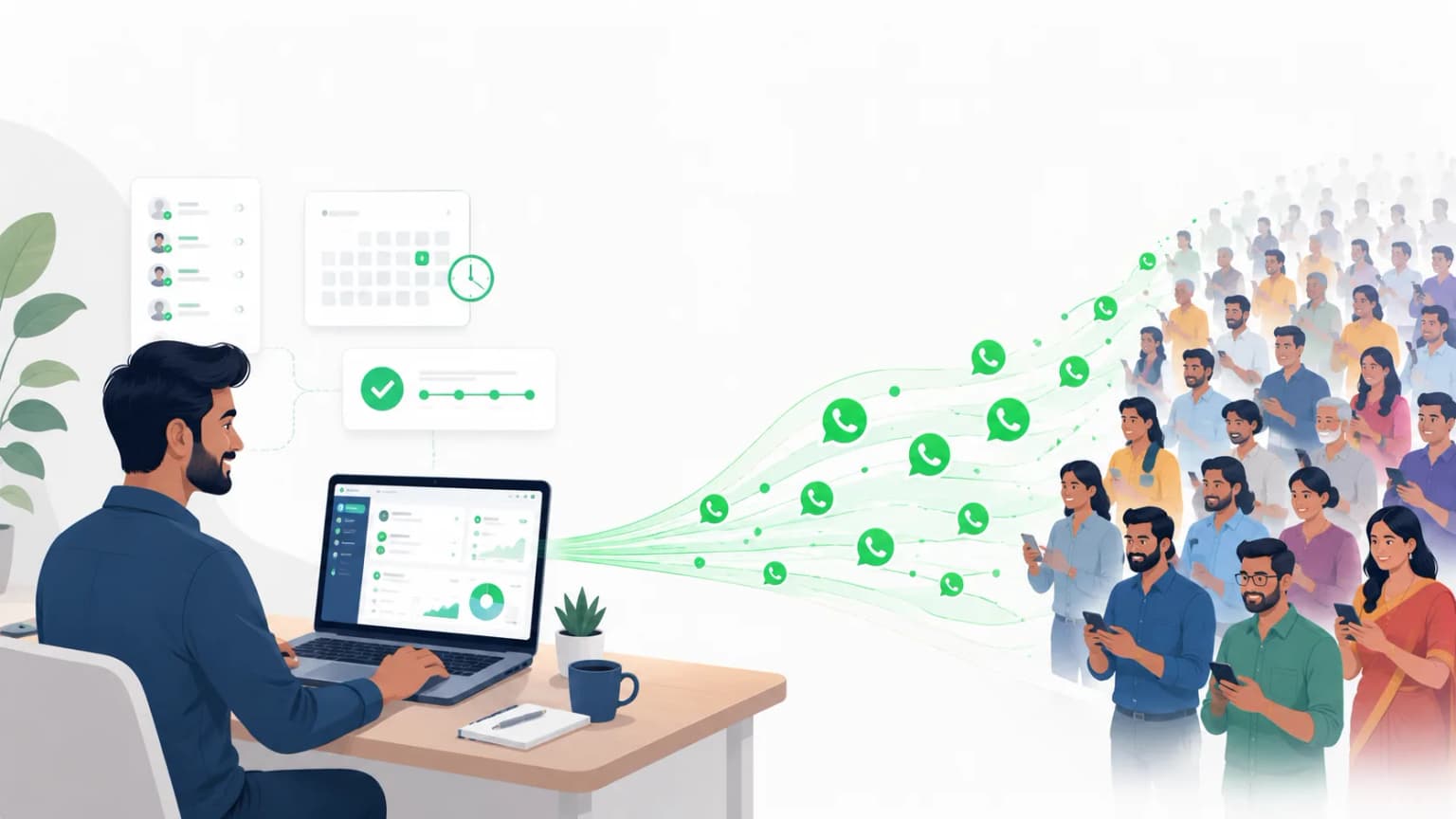
A WhatsApp bulk sender is a tool that sends one message to hundreds or thousands of contacts at once through WhatsApp’s official Business Platform, instead of copying and pasting into individual chats. Indian businesses use it for order updates, festive-season offers, reminders, and re-engagement pushes.
The free WhatsApp Business App caps broadcast lists at 256 contacts, with no way to grow that number or track delivery properly. Once that list runs out, setting up a dedicated bulk sender on the official WhatsApp Business API is the only viable way to keep growing.
D2C order confirmations
Send a cash-on-delivery confirmation before a product ships — a quick way to cut return-to-origin losses.
Festive-season offers
A coaching institute can blast an enrolment offer to five thousand leads in minutes, no retyping required.
Reminders & re-engagement
Payment reminders, appointment nudges, and win-back pushes sent to a whole segment at once.
Not all whatsapp bulk sender software is built the same way. The cheap ones generally compromise on official API access, template timing, and delivery tracking — and that compromise ends up costing you.
Some tools send messages through unrecognized WhatsApp Web automation rather than the actual API. That can look like a cheaper shortcut, but Meta actively blocks this kind of access — losing your number one day isn’t worth the short-term saving.
Among the popular ones for Indian businesses that are BSP and Meta-certified: AiSensy, Interakt, Gupshup, Wati, MyOperator, Gallabox, and DoubleTick. Each has its own edge in pricing, e-commerce integration, or support.
Compare at least two or three against your own use case and every fee before committing — there can be more than meets the eye once you factor in template markup and message costs.
WhatsApp broadcast pricing has two layers: Meta’s own per-message rate, and whatever your software provider charges on top. Rates differ hugely by category, so understanding both layers matters before you commit to a plan.
Every broadcast is classified into one of three categories: Marketing, Utility, or Authentication. Misclassification is expensive — sending an order confirmation as “marketing” instead of “utility” means paying 7.5x more for the same message.
| Category | Rate (India) | Notes |
|---|---|---|
| Marketing | ₹0.8631 | No volume discount at any scale |
| Utility | ₹0.115 | Gets cheaper as monthly volume climbs |
| Authentication | ₹0.115 | Gets cheaper as monthly volume climbs |
A ₹0.8631 marketing message is really closer to ₹1.02 on your bill once you add 18% GST on top of Meta’s fee and your BSP’s markup. Utility and authentication messages get cheaper as your monthly volume climbs, with discounts stepping up at higher tiers — marketing messages get no such discount, no matter how many you send. That’s another reason to reclassify anything transactional out of the marketing bucket the moment you can.
Meta now supports INR billing, but a WhatsApp Business Account billed in USD cannot be converted mid-way — it must be set up as INR-billed from the beginning.
On top of Meta’s fee, your bulk sender platform charges its own subscription, usually based on contact list size or messages sent per month. Basic plans can start in the low thousands of rupees a month; larger lists with automation and CRM integration often run into tens of thousands. Ask any provider for an all-in quote — message costs, GST, contact list limits, and template approval fees are what most often get left off the advertised price.
Two upcoming changes worth budgeting for
Meta’s own AI feature, Meta Business Agent, started billing per token from 1 August 2026 — roughly $2 per million tokens, or a few rupees per AI-generated reply.
From 1 October 2026, free replies inside the 24-hour support window stop being free, expected to land near the utility rate of roughly ₹0.115 per message. Meta has committed to publishing confirmed country-by-country figures by 1 September 2026.
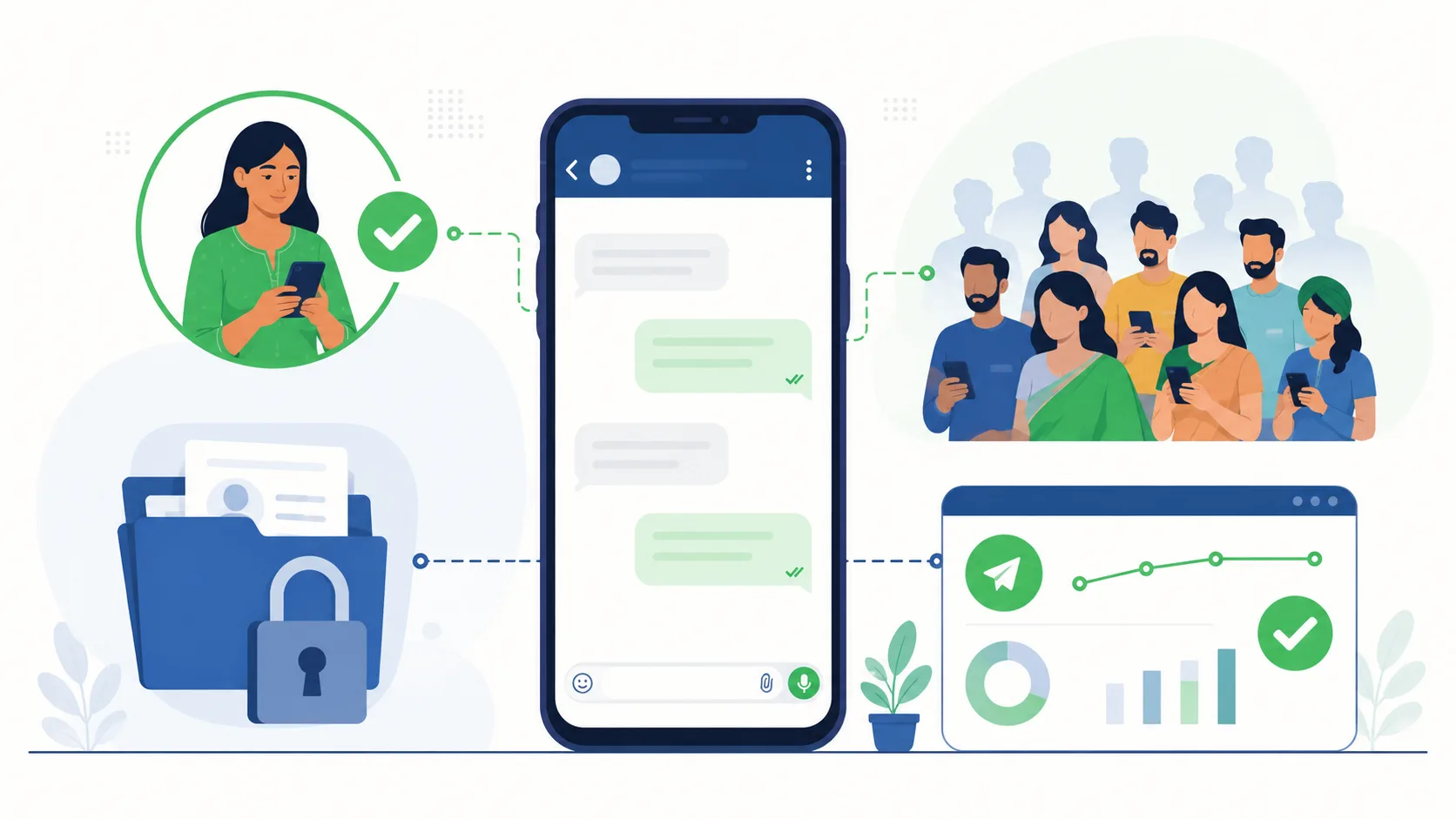
Beyond violating WhatsApp’s own policy, purchasing or scraping a contact list breaches the Digital Personal Data Protection Act, 2023 (DPDP Act). The Act allows penalties of up to ₹250 crore per breach for failing to safeguard personal data, and every broadcast you send is evidence of how that data is being used. Enforcement formally begins in May 2027, but the safest approach is to only message people who’ve clearly opted in, starting now.
It doesn’t. DLT (Distributed Ledger Technology) is a TRAI requirement specific to SMS and voice calls under the Telecom Commercial Communications Customer Preference Regulations (TCCCPR), governing sender IDs and templates for telecom traffic. WhatsApp runs over the internet through Meta’s own platform and template-approval system, so it sits outside TRAI’s DLT and DND (Do Not Disturb) framework entirely. That means you can message a customer who has signed up for WhatsApp even if their number is on the DND list, which SMS senders cannot do.
The sending limit ladder starts at 250 contacts/day for an unverified account, and climbs as your business gets verified and your quality rating holds up:
| Verification stage | Daily contact limit |
|---|---|
| Unverified account | 250 contacts / day |
| After Meta business verification | 1,000 contacts / day |
| Next tier | 10,000 contacts / day |
| Next tier | 1,00,000 contacts / day |
| Top tier | Unlimited |
Moving up a tier requires a high quality rating and consistently using at least half of your current send limit. Since October 2025, this is a per Meta business portfolio limit, not a per-number limit.
Per message, SMS is still cheaper — but that comparison misses the bigger picture once read rates are factored in:
| Metric | SMS | |
|---|---|---|
| Cost per message | ₹0.10 – ₹0.25 | ₹0.115 (utility) – ₹0.8631 (marketing) |
| Typical read rate | 15% – 25% | 85% – 95% |
| Works over DND-listed numbers | No — blocked by TRAI’s DND framework | Yes — sits outside TRAI’s DLT/DND rules |
| Needs internet on recipient’s phone | No | Yes |
SMS still wins for a single-time alert to a feature phone with no internet, or an alert where no response is expected or desired. For anything transactional or promotional where engagement matters, WhatsApp’s lower cost per outcome — despite a higher cost per message — usually makes it the better broadcast channel.
Begin by sizing your list and your sending frequency — the right plan matches usage, not the longest feature list on a pricing page.
Map your list size and frequency
Match usage to a plan — not to the longest feature list on the pricing page.
Shortlist Meta-certified BSPs
Only compare providers with genuine official Business Solution Provider status.
Request a demo with your own list
A generic walkthrough tells you far less than a demo run on your actual contacts.
Compare total cost, not sticker price
Add Meta’s messaging fees and 18% GST to the platform subscription before comparing.
Check regional language support
Confirm templates in Hindi, Tamil, Marathi, or whichever languages your customers use, can be approved and managed from one dashboard.
Confirm CRM / helpdesk integration
Manually exporting and importing contacts every broadcast defeats the point of automating this.
If you already run a CRM or helpdesk, confirm the bulk sender integrates directly with it. Done correctly, a bulk sender turns a slow, manual task into a five-minute one — without coming across as spam, without putting anyone’s details at risk, and without going beyond what the DPDP Act and Meta’s rules allow.
BetaXLab is a Meta-certified WhatsApp Business Platform provider. We’ll help you set up segmentation, opt-outs, and delivery tracking correctly from day one, with pricing that stays transparent as you scale.
Ready to send compliant bulk WhatsApp broadcasts?
Get Started →